
Dentist Near Me
 It is not uncommon for many of us to grab a bite to eat in a hurry. Americans have grown accustomed to bigger food portions at restaurants, but our mouths have not. Trying to fit that oversized sandwich or apple in your mouth might be worse for you than you have ever imagined. Below are some reasons why this could be detrimental for your oral health and what you can do about it.
Why This Is a Problem
According to the Academy of General Dentistry (AGD), taking bites that are too big for you to chew can not only cause jaw and teeth issues, it can also cause digestive problems. Discomfort, swelling and difficulty eating may result from opening your jaw too wide. Taking large bites may also result in food not being chewed thoroughly, which can lead to weight gain and digestive issues.
Temporomandibular Joint Disorder (TMD)
Constantly opening your jaw too wide becomes an even larger problem for people with temporomandibular joint disorder (TMD). The temporomandibular joint connects the jaw to the skull bones enabling movement during chewing. People with TMD, usually have a restriction with how wide they can open their jaws. Taking large bites of food, especially hard foods like apples, can aggravate this condition making pain and jaw clicking worse.
What You Can Do
If you have food that is too large to chew or starts to cause jaw discomfort, try cutting your food into smaller portions. This makes food easier to eat with less hassle. Also consider eating softer foods that won’t harm your teeth or irritate your jaw.
Tip: Avoid chewing on ice, popcorn kernels, hard candies, and opening nuts with your teeth. This can lead to a chipped tooth!
Contact our team today to schedule an exam and cleaning.
2500 Legacy Drive, Suite 210
Frisco, TX 75034
We are located at the corner of Stonebriar and Legacy on the second floor of the white, stone professional building.
Phone: (214) 618-4180
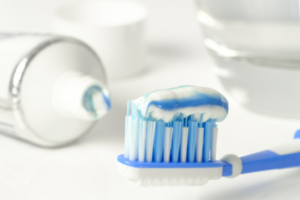 Brushing your teeth is the cornerstone of your oral health care – but is there room for improvement? Use our guide to determine if you’ve fallen into these common brushing habit mistakes, so you can keep your smile healthy and bright.
 Your baby’s first teeth developing can be a difficult experience for both you and your child. Most teeth begin to appear as early as 3 moths to 1 year old. This process can be uncomfortable and cause sleepless nights. However, there are things you can do to keep your toddler less irritable while they are teething.
 It is a common belief that teething causes secondary symptoms such as a runny nose, irritability, high fever, or problems with sleeping. However, studies have shown that these types of concerns are caused by health issues unrelated to teething. Here are some of the things to expect during teething, and some that are often attributed to teething, but are better discussed with your child’s doctor.
 When you travel by plane, your flight attendant will advise that in the rare case of an emergency, you must first put on your air mask before attempting to help those around you. When this is not followed, the results can be catastrophic, both for you and for those you might otherwise have been in a position to assist. While this is crucial information for all, many women particularly require this gentle reminder to prioritize their own needs above those of others.
 If you are on a vegetarian or vegan diet, it is important that you are aware of the impact these diets can have on your teeth and overall oral health. While there are numerous benefits of following a vegetarian or vegan lifestyle, your teeth depend on certain nutrients to remain strong and healthy. Vegetarians and vegans might be missing some key nutrients by avoiding certain foods. Here’s what you need to know.
 Our patients primarily seek out dental implants for two reasons: cosmetic and oral health. If you have lost a tooth due to injury, you may not be pleased with the overall appearance of your mouth and may be looking to improve your smile. Additionally, missing teeth—or even just one tooth—can have detrimental effects on your oral health, affecting how you chew and speak. If left for too long, it can also lead to shifting teeth and bone loss.
 Calcium is an important mineral for building strong, healthy teeth. Not everyone can tolerate the lactose found in dairy, which is often a prime source for calcium. There are a wide variety of options available to get the calcium you need. Here are six options rich in calcium:
 These are some of the most common questions we hear from parents, and the answers we provide:
 The negative effects of poor oral hygiene are well documented, and can impact much more than your mouth. A lot of serious medical conditions can be caused or worsened by complications arising for poor oral health. Starting your child’s oral care off right serves the twofold benefit of modeling the importance of good oral hygiene to them and giving their mouth a solid foundation of oral health. If you want to ensure your child’s oral health is taken care of, contact our pediatric dental team today to schedule your child’s next examination and cleaning!